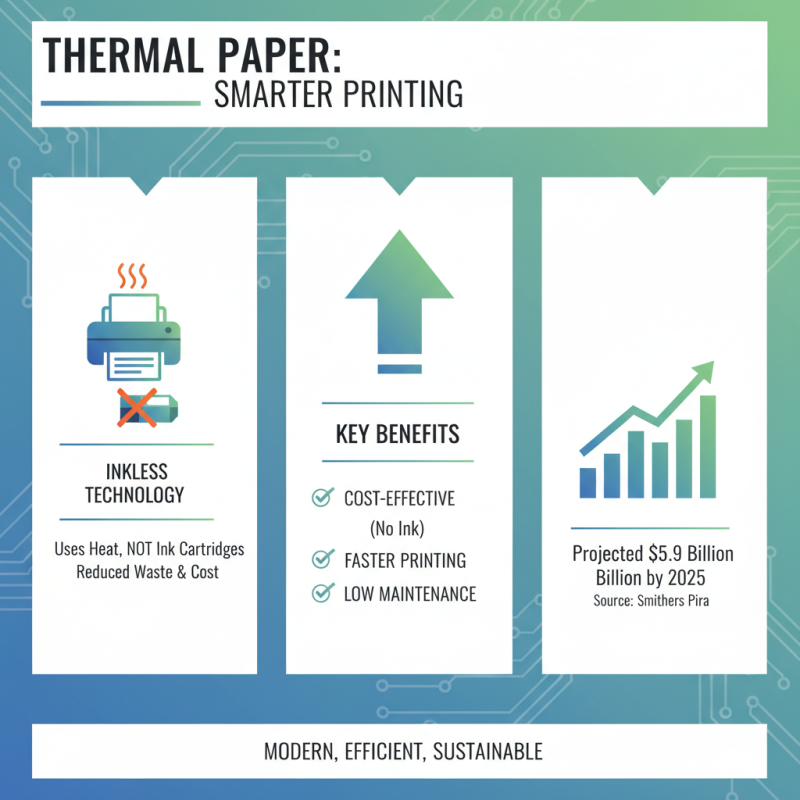
Why Are Thermal Papers Essential for Modern Printing Solutions?
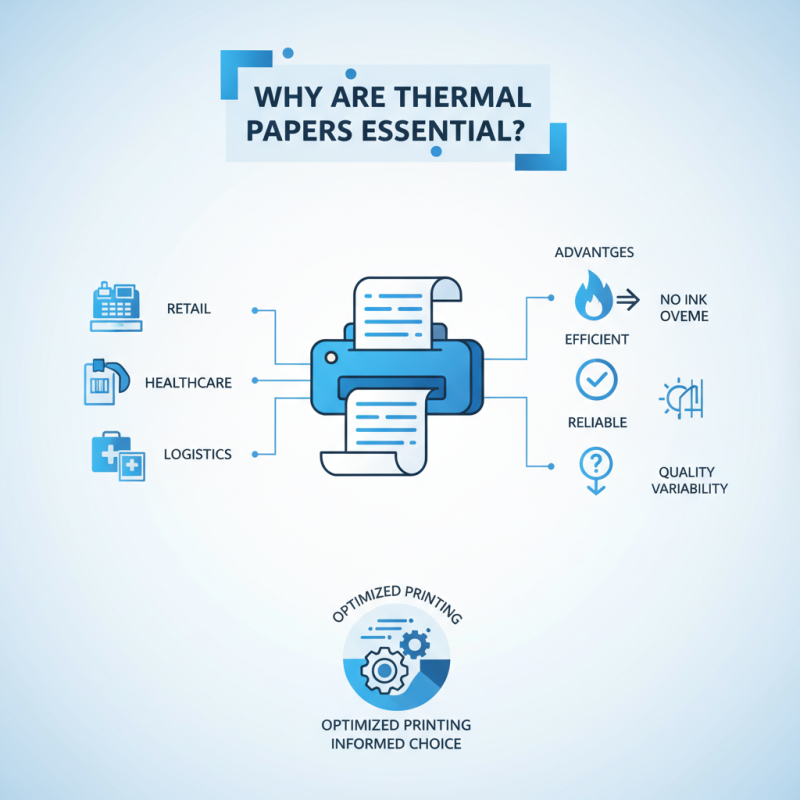
Thermal papers have become a cornerstone of modern printing solutions. These specialized papers are designed to respond to heat, producing high-quality prints without the need for ink. They are widely used in receipt printers, barcode scanners, and various point-of-sale systems. The versatility of thermal papers caters to different industries, from retail to healthcare.
Many professionals rely on thermal papers for their efficiency and reliability. However, the quality of thermal papers can vary greatly between manufacturers. Some may fade over time, which poses a challenge for businesses that need durable documentation. It's crucial to choose reputable suppliers to ensure that the thermal paper meets industry standards. A lack of attention to detail in selecting the right product can lead to lost information or poor customer experience.
In conclusion, thermal papers are essential in today's fast-paced world. Their role in printing solutions is significant but often underestimated. Awareness of their limitations and potential drawbacks is just as important as recognizing their advantages. Being informed enables businesses to optimize their printing processes effectively.
The Role of Thermal Paper in Contemporary Printing Technologies
Thermal paper plays a critical role in contemporary printing technologies. It’s widely used in receipt printers, labels, and ticket machines. This type of paper is coated with a unique chemical formulation. When exposed to heat, it changes color, creating clear images and text. The convenience of thermal paper makes it indispensable in businesses.
Consider its use in retail environments. Busy cash registers rely on thermal printers. Customers receive receipts quickly, improving their shopping experience. This efficiency meets the demands of high-traffic settings. However, there are concerns about the longevity of thermal prints. They can fade over time, raising questions about archival quality.
Moreover, sustainability is another aspect needing attention. While thermal paper eliminates the need for ink, its environmental impact must be considered. Many manufacturers are exploring eco-friendly alternatives. Even so, the demand for thermal printing will continue, given its speed and versatility. It remains vital for various applications, from food labels to shipping. Understanding its strengths and weaknesses can lead to better solutions in the printing landscape.
Advantages of Using Thermal Paper Over Traditional Printing Methods
Thermal paper has become an essential component in modern printing solutions. Its advantages over traditional printing methods are significant. Unlike ink printers, thermal printers utilize heat to transfer images or text onto the paper. This process eliminates the need for ink cartridges, which can be costly and inconvenient. A study by market research firm Smithers Pira reports that the thermal paper market is projected to reach $5.9 billion by 2025, highlighting its growing significance.
The efficiency of thermal paper lies not just in cost savings. It often produces sharper, clearer images. In retail and hospitality sectors, where speed is crucial, thermal paper allows for quicker transaction times. Reports indicate that businesses can decrease transaction times by up to 10% when using thermal printing. Additionally, thermal paper is moisture-resistant and has a longer shelf life compared to traditional ink-printed receipts. However, it should be noted that thermal paper can degrade with prolonged exposure to heat and light, raising concerns for archival purposes.
Lastly, while thermal printing is advantageous, it isn't without drawbacks. The paper can sometimes produce issues with smudging. Businesses must also consider the environmental impact of thermal paper, which often contains BPA or similar chemicals. It's critical for industries to assess the balance between efficiency and potential health implications. As thermal paper continues to evolve, addressing these concerns will be essential for wider acceptance.
Applications of Thermal Paper in Various Industries and Sectors
Thermal paper is vital across various industries. A significant application is in retail, where it serves as an efficient medium for printing receipts. According to industry estimates, over 80% of receipts printed in retail are generated on thermal paper. It offers benefits like quick printing and reduced noise. These features enhance customer experiences, making transactions smoother.
In the healthcare sector, thermal paper prints labels and medical records. Fast, legible printing is crucial during emergencies. Studies highlight that hospitals using thermal printing can improve documentation speed by 30%. Despite its advantages, there are concerns about durability. Some thermal papers may fade over time, potentially compromising critical information.
The logistics and transportation sectors also rely heavily on thermal paper. Shipping labels are often printed on this medium due to its resistance to smudging. This characteristic is essential when handling packages in various environments. However, there's a need for better options that can withstand extreme conditions. Not all thermal papers meet these requirements, leading companies to reevaluate their choices.
Why Are Thermal Papers Essential for Modern Printing Solutions? - Applications of Thermal Paper in Various Industries and Sectors
| Industry |
Application |
Advantages |
Common Products |
| Retail |
Receipt Printing |
Quick drying, cost-effective, high-quality |
Cash Register Receipts |
| Hospitality |
Order Tickets |
Durable, clear print quality |
Kitchen Order Tickets |
| Transportation |
Ticketing Systems |
Fast printing, moisture resistant |
Train and Bus Tickets |
| Healthcare |
Patient Records |
High legibility, compact size |
Prescription Labels |
| Manufacturing |
Product Labeling |
Chemical resistance, longevity |
Shipping Labels |
Environmental Considerations of Thermal Paper Usage
Thermal paper has gained popularity in modern printing arenas, but its environmental impact deserves attention. While it simplifies transactions in retail and hospitality, the ecological footprint must not be overlooked. Thermal paper is often coated with BPA or BPS, substances known to disrupt endocrine systems. This raises concerns about health risks during disposal and recycling.
The production of thermal paper also poses environmental challenges. The use of chemicals in its manufacturing process can lead to toxic waste. This waste often ends up in landfills, where it contaminates soil and water sources. Despite its convenience, we need to consider sustainable alternatives. Recycling options are limited due to the chemical coatings. This complicates efforts to reuse materials responsibly.
As consumers, we play a significant role in this issue. Awareness around the ecological implications of our choices is crucial. Encouraging businesses to adopt eco-friendly materials or practices is essential. We should question the norms of convenience; that might lead to more sustainable printing solutions.
Future Trends and Innovations in Thermal Paper Printing Solutions
Thermal paper continues to shape the future of printing. Its rapid growth is driven by various industries, including retail and logistics. This type of paper is essential for producing receipts, tickets, and labels. The innovative spirit around this medium is fostering advancements in efficiency and sustainability.
New thermal printing technologies are emerging. They offer enhanced durability and faster response times. Some papers now incorporate eco-friendly materials. These innovations aim to reduce waste and promote recycling. Additionally, developments in color thermal printing open new possibilities. Businesses can now use thermal papers for vibrant marketing materials.
**Tip:** When selecting thermal paper, consider its compatibility with your printer. This ensures optimal performance.
The shift toward digital solutions presents challenges. Not all businesses have adapted to these changes. This gap creates an opportunity for improvement. A focus on user training and education in thermal printing can help bridge this divide. The future of thermal paper lies in adapting to evolving needs while maintaining quality.
**Tip:** Regularly check paper quality to avoid printer issues. Poor quality can lead to misprints or jams.
Thermal Paper Usage Trends in Various Industries (2020-2023)






 Phone
Phone Send Email