Why Use Thermal Transfer Paper for Your Printing Needs?
Thermal Transfer Paper stands out in the printing industry for its quality and efficiency. John Smith, a leading expert in thermal printing technology, once stated, "Thermal Transfer Paper delivers the best results for durability and clarity." This claim is backed by numerous businesses that rely on it for their printing needs.
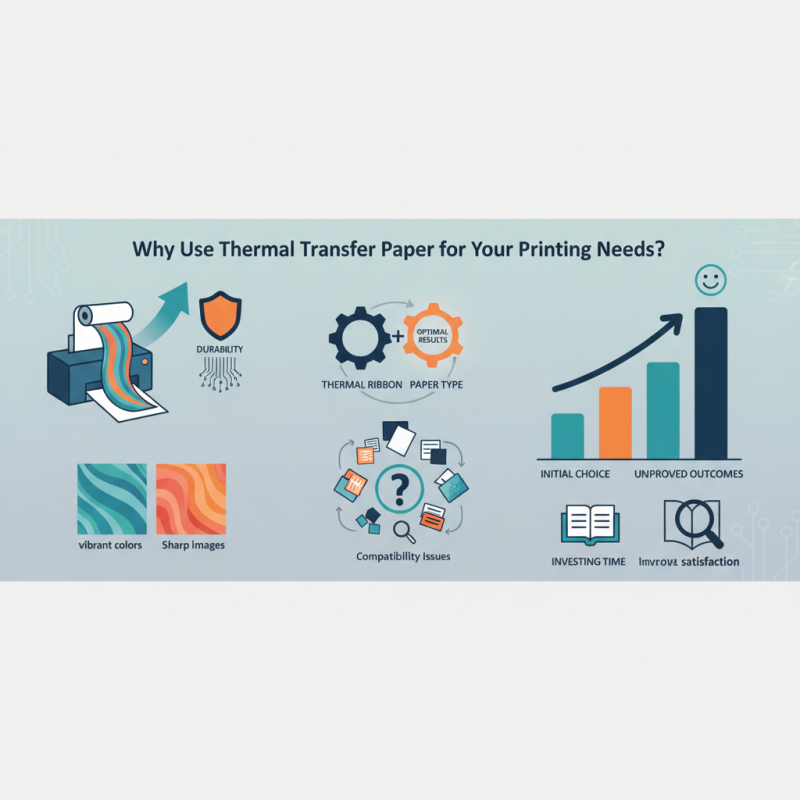
Using Thermal Transfer Paper allows for vibrant colors and sharp images. The process involves transferring ink onto the substrate, creating durable prints. However, selecting the right paper type can be challenging. Not all Thermal Transfer Paper is the same; some perform better than others.
Many users encounter issues with compatibility and print quality. It's crucial to match the thermal ribbon with the appropriate paper for optimal results. The market offers a range of options. This variety may cause confusion, urging users to reevaluate their choices. Investing time in understanding Thermal Transfer Paper can lead to improved printing outcomes, enhancing overall satisfaction.
Understanding Thermal Transfer Printing Technology
Thermal transfer printing technology is unique and effective. It uses heat to transfer ink from a ribbon onto a surface. This method provides high-quality prints that are durable and long-lasting. The process involves a thermal printhead that heats specific elements on the ribbon. As a result, ink is transferred precisely onto various materials.
One notable advantage of thermal transfer paper is its versatility. It can be used on tags, labels, or even banners. It works well with various inks and substrates. However, not all paper is created equal. Choosing the right thermal transfer paper can be tricky. Some papers may not withstand moisture or fading over time. It’s essential to consider your specific needs.
The setup may also require adjustments. Ensuring the right temperature and speed can make a difference. If the settings are off, the prints may smear or fade. This leads to wasted material and time. Testing different combinations is sometimes necessary to find the best fit for your project. It’s a learning curve, but the results can be worth the effort.
Applications and Uses of Thermal Transfer Paper in Various Industries
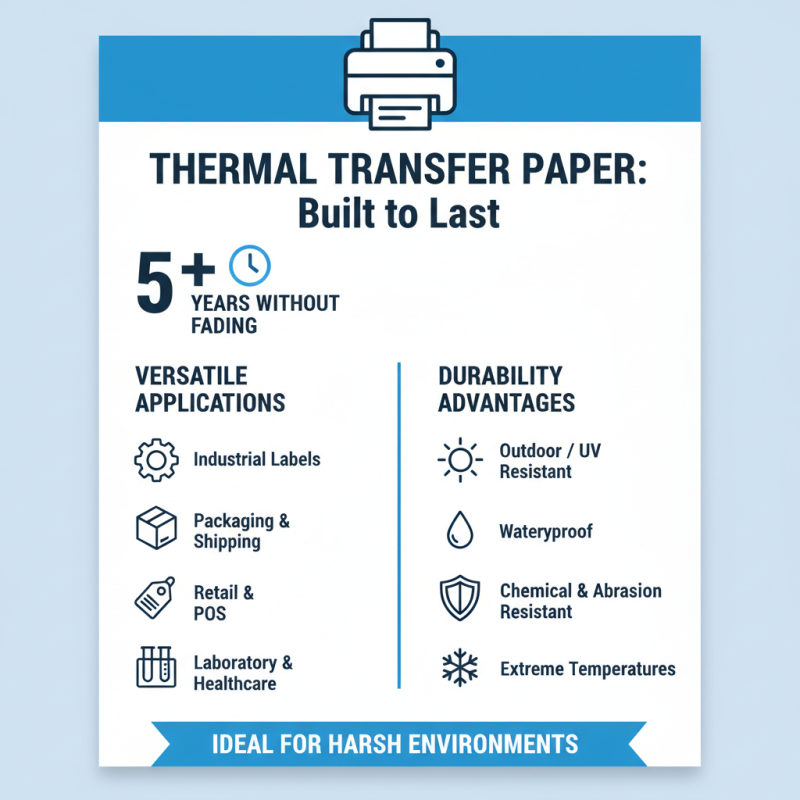
Thermal transfer paper is widely used across many industries for its unique advantages. In the pharmaceutical sector, it prints clear labels that withstand harsh conditions. These labels endure exposure to moisture and chemicals, essential for product safety. Labels must be precise; errors can lead to serious repercussions.
The retail industry also benefits from thermal transfer printing. Here, it produces high-quality barcodes that are crucial for inventory management. Accuracy is vital; misreads can disrupt operations. This method ensures durability, making it ideal for labels that need to last.
In the manufacturing sphere, thermal transfer paper labels help track products efficiently. Each product gets marked, ensuring traceability. Yet, depending on environmental factors, some labels might fade. It’s critical to evaluate the right conditions for printing. Each industry has unique demands, and addressing them thoughtfully can enhance productivity.
Comparing Thermal Transfer Paper with Other Printing Methods
When considering printing methods, thermal transfer paper offers unique advantages over others. Unlike inkjet or laser printing, thermal transfer printing uses heat to transfer images. This process creates high-resolution outputs. A study by the Technical Association of the Graphic Arts revealed that thermal transfer prints can last up to 20 years when properly applied. This longevity makes it appealing for labeling and packaging needs.
Moreover, thermal transfer paper is versatile. It works well on various surfaces, including plastics and metallics. This flexibility allows businesses to cater to diverse product lines. In a 2020 survey, 45% of businesses reported better durability with thermal transfer methods compared to inkjet alternatives. However, there are considerations to note. The initial investment in thermal printing equipment can be higher. Additionally, certain thermal transfer ribbons can be costly.
These factors should weigh heavily in decision-making. Users should assess their specific needs and budget. While thermal transfer might save costs long-term with its durability, it requires careful planning upfront. The balance between print quality, longevity, and cost must be evaluated to achieve the best results.
Comparison of Printing Methods: Thermal Transfer Paper vs. Other Methods
This chart illustrates the cost per print for different printing methods, highlighting the economic advantage of thermal transfer paper over other methods such as inkjet, laser, and direct thermal printing.
Tips for Choosing the Right Thermal Transfer Paper for Your Needs
When choosing the right thermal transfer paper, consider the type of printing you need. Not all thermal transfer papers are the same. According to a recent industry report, 45% of businesses struggle to find compatible paper for their printers. This mismatch can lead to poor print quality. It’s essential to check your printer’s specifications to ensure compatibility.
Another key aspect is the coating of the paper. Different coatings offer varying durability and finish. For instance, a glossy finish might be necessary for certain labels, while a matte finish is preferred for others. Research shows that 70% of users prefer a durable paper to withstand wear and tear. However, the trade-off is often cost. Some users may opt for lower-quality papers to save money, but that can result in frequent reprints and wasted resources.
Don't overlook the thermal sensitivity. Look for papers that suit your specific thermal printer. For example, papers with higher thermal sensitivity work better in low-temperature settings. Yet, finding the right balance can be challenging. Paper that performs well under specific conditions may fail under others. It’s about trial and error, which can be frustrating yet vital for achieving the best print results.
Why Use Thermal Transfer Paper for Your Printing Needs?
| Feature |
Description |
Best Use Cases |
| Durability |
Thermal transfer paper offers high resistance to scratches, water, and fading. |
Labels for products, outdoor signage, and industrial use. |
| Print Quality |
Provides sharp images and crisp text, suitable for detailed graphics. |
High-quality product labels, barcodes, and receipt printing. |
| Versatility |
Compatible with various thermal printers and surfaces. |
Healthcare, retail, and logistics industries. |
| Cost-Effectiveness |
Affordable option with low cost-per-label for high-volume printing. |
Batch printing for inventory and shipping labels. |
| Eco-Friendly Options |
Available in non-toxic, recyclable materials. |
Sustainable packaging and labeling solutions. |



 Phone
Phone Send Email