Why Choose Direct Thermal Roll for Label Printing Solutions?
In the realm of label printing solutions, the choice of materials can significantly impact efficiency. Experts agree that "Direct Thermal Roll" technology has transformed the industry. According to Dr. Emily Chen, a leading authority on printing technology, “Direct Thermal Rolls offer unmatched convenience and speed.” This statement highlights the benefits that have made these rolls popular.
Direct Thermal Rolls utilize heat-sensitive materials. When paired with heat-sensitive printers, they create high-quality labels without needing additional ink. This efficiency can lead to cost savings and reduced waste. However, users must consider their specific needs. Many users initially overlook the importance of durability. For short-term applications, Direct Thermal Rolls are ideal. Yet, for long-lasting labels, other solutions may be necessary.
Choosing the right printing solution is critical. The market can be overwhelming, with many options available. Re-evaluating one's choice of Direct Thermal Rolls can yield insights. Additionally, understanding their limitations can lead to better decision-making. While they offer convenience, not every situation may benefit from this technology. A thoughtful approach can enhance overall effectiveness in label printing.

Understanding Direct Thermal Printing Technology
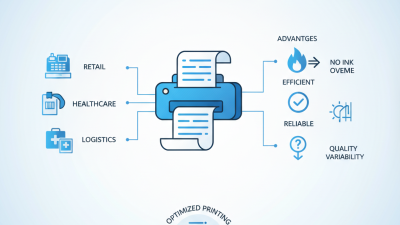
Direct thermal printing technology is widely recognized for its efficiency and reliability in label printing. This method uses heat-activated paper to produce images directly. According to a report by Smithers Pira, the global market for thermal printing is expected to reach $52.8 billion by 2026. This growth highlights the increasing adoption of direct thermal solutions across various industries, including retail and logistics.
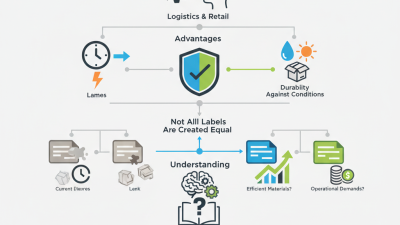
One of the main advantages of direct thermal roll labels is their simplicity. No ink, toner, or ribbon is required, which reduces overall costs and maintenance time. In a study conducted by IDTechEx, businesses using direct thermal technology reported a 15% decrease in operational expenses. However, it’s important to note that direct thermal labels can have limitations in durability. Exposure to heat or sunlight can cause fading.
**Tip:** Always store direct thermal labels in a cool, dark place to prolong their lifespan. Consider testing in different environments to find the best materials for your needs.
Another consideration is the quality of print. While direct thermal printing provides decent image quality, it may not match the precision of other methods like thermal transfer. This is especially true for fine details. Regular quality checks can help ensure that label clarity remains optimal, avoiding costly errors in labeling.
**Tip:** Implement routine printing assessments to catch any issues early on. Assessing print quality can save time and resources in the long run.
Benefits of Direct Thermal Rolls in Label Printing
Direct thermal rolls are transforming the world of label printing solutions. They use heat to produce images on specially coated paper. This method eliminates the need for ink or toner, making it both cost-effective and efficient. As a result, businesses can save money while maintaining quality outputs. The simplicity of the process reduces mechanical failures associated with traditional printing methods.
One significant benefit is their environmental impact. With no inks or solvents required, direct thermal rolls produce less waste. However, some users may find their durability lacking in certain environments. Direct thermal prints can fade over time, especially when exposed to heat or sunlight. Users should evaluate their specific needs to determine if this printing method suits their application.
Direct thermal rolls also offer fast printing speeds. This can be a game changer in high-volume settings, like shipping or retail. The ability to print labels on demand enhances workflow efficiency. Yet, the trade-off includes limited longevity of the printed labels. Users must find a balance between speed and the lifespan of the labels. Understanding these factors is key to making informed decisions.
Applications and Industries Using Direct Thermal Labels
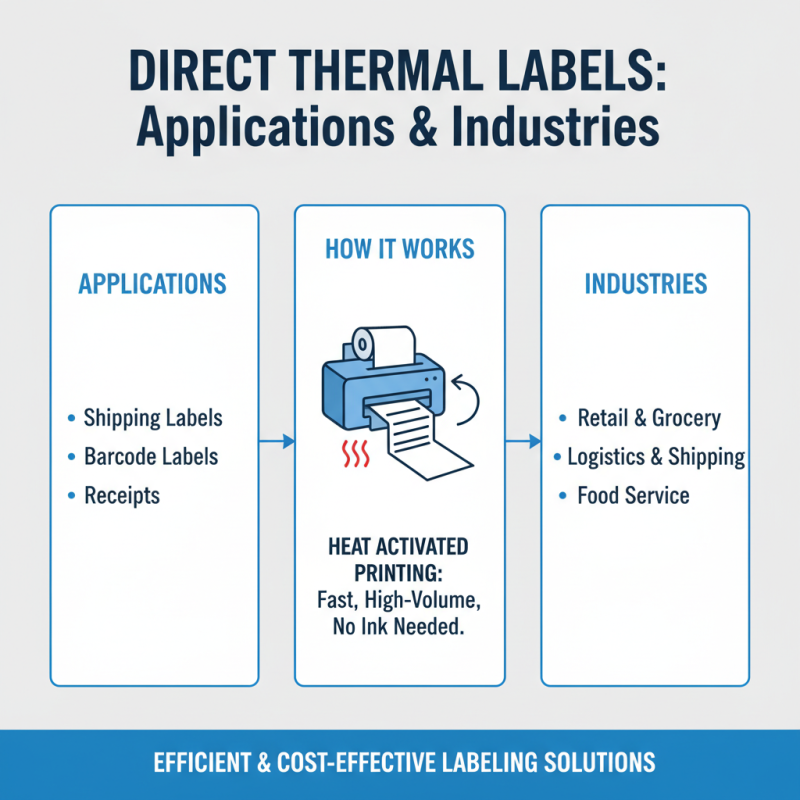
Direct thermal roll labels are increasingly popular in various industries. These labels work by using heat to create an image. This method is efficient for printing large volumes quickly. They are often used in retail, shipping, and food service.
In retail, these labels can be found on products and shelves. They help manage inventory and pricing. Shipping companies rely on them for address labels and tracking. In food service, direct thermal labels are ideal for printing expiration dates and nutrition information. Their ability to withstand different temperatures makes them suitable for various environments.
Tip: Ensure your thermal printer settings match the label type. This can improve print quality and reduce issues.
While direct thermal labels are advantageous, they have limitations. They may fade when exposed to sunlight or moisture. It’s essential to store them properly to avoid damage. Additionally, these labels are not always the best choice for high-durability needs.
Tip: Test different storage methods to find what works best for your labels. Consider humidity and light exposure.
Comparative Analysis: Direct Thermal vs. Other Label Printing Methods
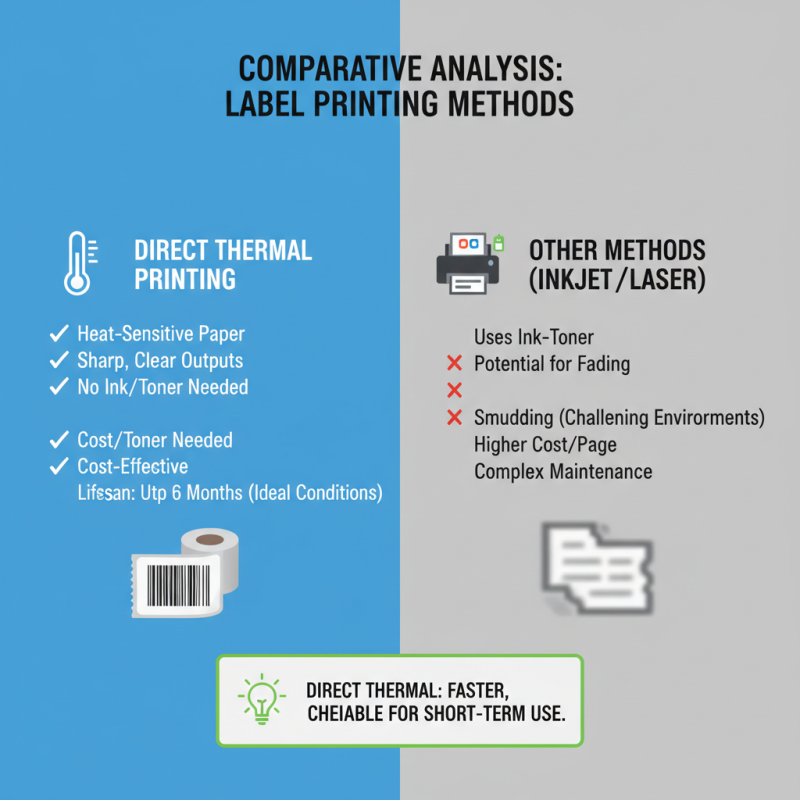
Direct thermal printing offers distinct advantages over other label printing methods. This technique uses heat to produce images on thermally sensitive paper, resulting in sharp and clear outputs. According to industry reports, direct thermal labels can last up to six months under proper conditions. In contrast, inkjet and laser printing processes can show signs of fading or smudging over time, especially in challenging environments.
However, direct thermal isn't without its drawbacks. Long exposure to heat or sunlight can compromise label quality. Some reports indicate that this method may not be ideal for products requiring longevity beyond a year. Additionally, while direct thermal printing is often more cost-effective for short-term solutions, costs can increase for larger print runs when specialized materials are involved.
Tips: Always assess your printing needs carefully. If durability is a concern, consider using protective coatings for direct thermal labels. Regularly check label storage conditions to extend print quality. The method you choose should reflect both your immediate requirements and long-term goals.
Cost Efficiency and Sustainability of Direct Thermal Solutions
Direct thermal roll labels stand out for their cost efficiency and sustainability. The absence of ink or toner in this printing method reduces overall expenses significantly. Businesses save money not only on materials but also on maintenance. This budget-friendly approach helps small enterprises allocate resources effectively.
Sustainability is another key aspect of direct thermal solutions. These labels typically require less energy during production. The use of thermal technology minimizes waste compared to traditional printing methods. Moreover, direct thermal rolls are often recyclable or biodegradable, making them an environmentally friendly option.
Tips: Always consider the types of labels you really need. Think about your production flow and how many labels get wasted. Evaluate your energy consumption to further enhance sustainability. Regularly review your printing processes to find areas for improvement. Using direct thermal labels can lead not just to savings, but also to a greener future.
Cost Efficiency and Sustainability of Direct Thermal Solutions




 Phone
Phone Send Email