Leave Your Message
Global buyers often ask a simple question: Which Inkjet Label Sheets offer the best balance of print quality, adhesion, and cost? The answer is rarely universal. A sheet that feeds smoothly through an office inkjet printer may curl in humid warehouses or show weak adhesion on textured glass. Small details matter, including coating type, sheet thickness, drying speed, and label corner design.
Packaging consultant Mike Ferrari has said, “Digital printing is not simply a replacement for conventional printing; it creates new possibilities for shorter, more flexible production.” This perspective helps explain why Inkjet Label Sheets remain important for samples, product variations, seasonal packaging, and regional orders. Buyers can produce sharp barcodes, ingredient panels, and brand graphics without ordering excessive quantities. Still, attractive color is not enough. A practical evaluation should include a real printer test, a rub test, and storage under changing temperature conditions.
No sheet wins everywhere. Some premium products resist smearing but cost more. Some economical sheets print well but require longer drying time. That trade-off deserves attention. This guide compares leading options through a buyer-focused lens, considering compatibility, adhesive performance, paper feel, moisture resistance, and availability across markets. It also recognizes an uncomfortable point: product specifications do not always predict real-world results. Printer settings, operator habits, and shipment conditions can change the outcome. Careful sampling remains essential before a large purchase.
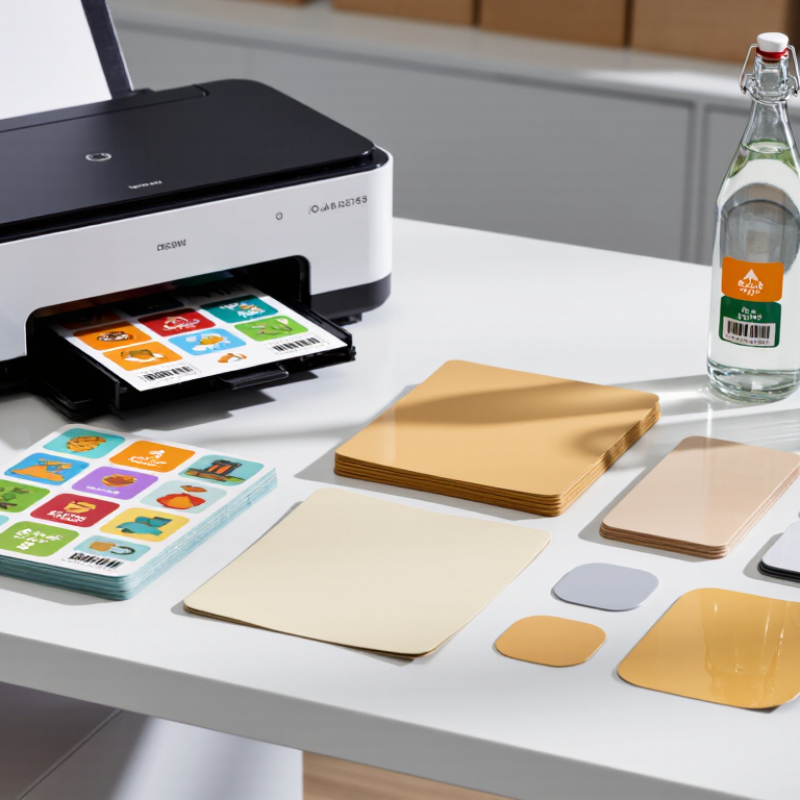
Inkjet label sheets are adhesive sheets designed for desktop or office inkjet printers. They usually contain three layers: a printable face stock, pressure-sensitive adhesive, and release liner. The printer sprays microscopic ink droplets onto the coated surface. Heat, airflow, or absorption then fixes the image. Some sheets use dye ink for vivid color, while pigment ink usually offers stronger water and light resistance.
The process looks simple, but paper choice matters. A label sheet with poor coating can produce feathered text, dull colors, or slow drying. In practical testing, dense black areas may also curl the sheet slightly. That detail is easy to miss. Buyers should check printer compatibility, sheet thickness, adhesive temperature range, and whether the surface supports aqueous ink. A small test run is wiser than trusting a product description.
Market signals support this demand. Smithers’ report, The Future of Digital Print for Packaging to 2028, valued digital packaging print at about US$22 billion in 2022 and projected nearly US$37 billion by 2028. This growth reflects shorter print runs, variable data, and faster customization. However, digital growth does not make every inkjet label sheet suitable for global use. Humidity, shipping conditions, and recycling requirements still vary by region. The honest answer is less exciting: performance depends on the complete system, not the sheet alone.
| Label Sheet Type | Typical Face Material | Inkjet Compatibility | Common Sheet Sizes | Typical Thickness | Surface Finish | Adhesive Options | Best-Suited Applications | Key Buying Considerations |
|---|---|---|---|---|---|---|---|---|
| Economy Paper Labels | Uncoated or lightly coated paper | Designed for dye-based and pigment-based inkjet printers; test for ink absorption | A4, A5, Letter, and custom die-cut sheets | Approximately 70–100 microns for the face stock | Matte | Permanent paper-compatible adhesive | Address labels, file labels, shipping identification, and short-term packaging | Low purchase cost, printer feed reliability, and resistance to smearing |
| Premium Matte Paper Labels | Inkjet-receptive coated paper | Optimized for sharper text, barcodes, and color graphics from inkjet printers | A4, Letter, A3, and custom sheet formats | Approximately 80–120 microns for the face stock | Smooth matte | Permanent or removable options | Retail packaging, product identification, inventory labels, and promotional stickers | Coating uniformity, color reproduction, barcode contrast, and drying time |
| Glossy Photo-Quality Labels | High-gloss inkjet-coated paper | Suitable for inkjet printers using dye or pigment inks; printer profile may affect color | A4, Letter, A3, and custom die-cut sheets | Approximately 90–140 microns for the face stock | Glossy or high-gloss | Permanent adhesive; removable versions may be available | Decorative packaging, color product labels, event stickers, and photo-style graphics | Fingerprints, glare, drying time, and possible need for protective lamination |
| White Synthetic Film Labels | Polypropylene or polyester film with an inkjet-receptive coating | Requires a film-compatible inkjet coating; not every plain film accepts ink | A4, Letter, A3, and custom sheets | Approximately 50–100 microns for the film face | Matte, satin, or gloss | Permanent, removable, or freezer-grade formulations | Outdoor identification, laboratory containers, logistics, and moisture-prone packaging | Water resistance, tear resistance, temperature range, and ink adhesion |
| Clear Film Labels | Transparent polypropylene or polyester film | Needs a clear-film inkjet coating; white ink is generally required for opaque white areas | A4, Letter, and custom sheet formats | Approximately 50–100 microns for the film face | Clear gloss or clear matte | Permanent adhesive for smooth, clean surfaces | Window graphics, transparent packaging, jars, bottles, and product presentation | Transparency, surface cleanliness, ink opacity, and edge lift on curved containers |
| Removable Paper Labels | Matte or lightly coated paper | Compatible with inkjet printing when the surface coating matches the ink type | A4, Letter, A5, and custom formats | Approximately 70–110 microns for the face stock | Matte | Low-tack removable adhesive | Temporary pricing, event identification, organization, and reusable containers | Residue, clean removal period, surface compatibility, and storage conditions |
| Freezer-Grade Labels | Coated paper or synthetic film | Requires an inkjet-receptive surface and inks that remain legible after handling | A4, Letter, and custom die-cut sheets | Approximately 80–150 microns for the face stock | Matte or satin | Cold-temperature permanent adhesive | Frozen food, laboratory samples, cold-chain logistics, and refrigerated storage | Application temperature, storage temperature, condensation resistance, and adhesive performance |
| Recycled-Content Paper Labels | Recycled paper with matte inkjet coating | Suitable for inkjet printing when the coating supports the selected ink formulation | A4, Letter, A5, and custom formats | Approximately 80–120 microns for the face stock | Natural matte | Permanent or removable paper-compatible adhesive | Eco-focused packaging, office organization, artisan goods, and short-term product labeling | Recycled content percentage, fiber appearance, print uniformity, and disposal requirements |
Note: Performance varies with printer technology, ink formulation, label construction, storage conditions, and application surface. Always verify printer compatibility and conduct application testing before commercial production.


 Phone
Phone Send Email