Choosing the right Thermal Printing Labels can determine whether a shipment arrives readable, scannable, and professionally presented. A label may look simple, yet its adhesive, coating, size, and thermal compatibility affect daily operations. In a busy warehouse, a weak adhesive can lift from a cold carton before the package leaves the loading dock. Poor contrast can also make a barcode fail under a handheld scanner. These details deserve careful attention.
This guide shares ten practical tips for evaluating label materials, printer settings, storage conditions, and supplier quality. The recommendations reflect common experiences from packaging, retail, healthcare, and inventory environments. Direct thermal labels suit many short-term applications, while thermal transfer labels often provide stronger durability. The better option depends on heat, moisture, friction, and expected label life. There is no universal choice.
Check the roll core, winding direction, and printer specifications before ordering. A label that fits the printer may still create jams or uneven printing. Test samples on real boxes, shelves, and containers. Small trials reveal problems that product descriptions often miss. Ask suppliers about adhesive performance and batch consistency. Reliable documentation matters, but it is not perfect. Some conditions remain difficult to predict.
These ten tips will help narrow the choices with evidence rather than assumptions. They also encourage a useful pause: the cheapest label may become expensive after reprints, delays, and manual relabeling. Practical testing remains essential. Good labels support accurate identification, smoother workflows, and fewer avoidable interruptions.
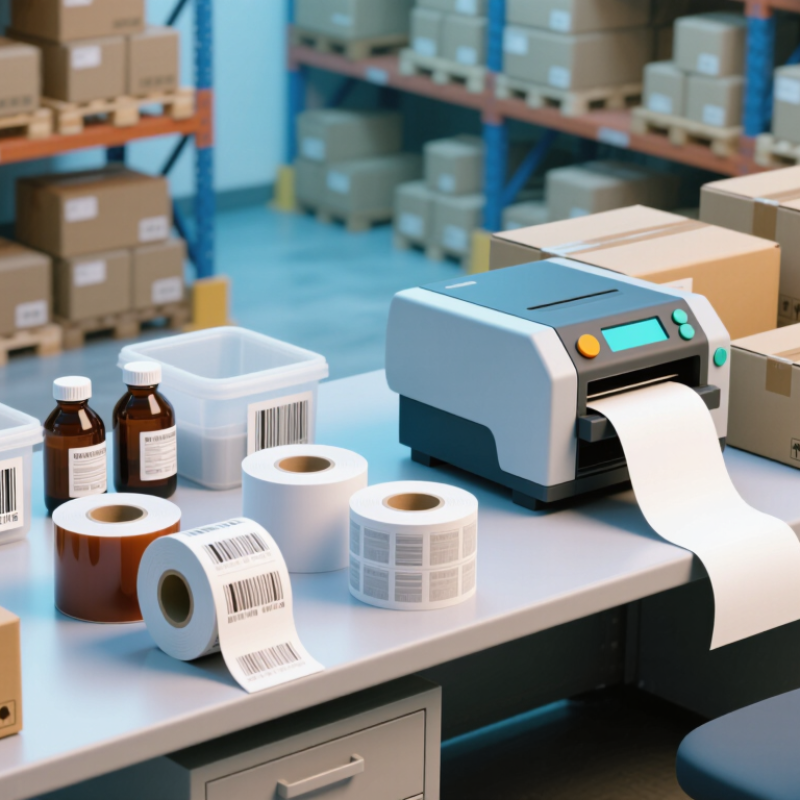
Before ordering thermal labels, identify the printer’s printing method. Direct thermal labels react to heat from the printhead. They need no ribbon. Thermal transfer labels use a heated ribbon to create a more durable image. Choosing the wrong method can produce blank labels, smudged text, or excessive printhead wear. Check the printer manual, then inspect the current label roll.
Compatibility involves more than printing technology. Measure the label width, height, roll diameter, core size, and gap spacing. Confirm that the printer accepts the label material and adhesive. A roll may fit physically but still feed poorly. That mistake is easy to miss. It can waste hours during a busy shipping period.
Consider the label’s working environment. Direct thermal media may darken under sunlight, heat, or friction. Thermal transfer media usually performs better for long-term storage, outdoor handling, or chemical exposure. Test a small batch before purchasing in volume. Print fine text, barcodes, and solid areas. Rub the surface and check readability after several days. A quick test helps, but it is not infallible. Humidity, storage conditions, and printer settings can change results. I have found that real handling often reveals problems that a clean sample does not. Record the successful settings, including darkness, speed, and ribbon type, for repeatable production.
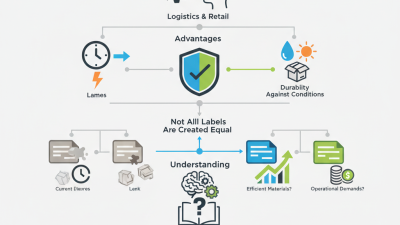
Choosing thermal labels starts with the working environment, not the printer.
Direct thermal labels suit short-term receipts, shipping, and indoor tracking because heat creates the image without ribbon ink. However, sunlight, friction, and temperatures above 50°C can darken or fade them. Thermal transfer labels use a ribbon and usually provide stronger resistance to moisture, chemicals, abrasion, and long storage.
According to Grand View Research, the global thermal printing market was valued at about $4.4 billion in 2023 and is projected to grow at roughly 5.6% annually through 2030. That growth reflects wider use in logistics, healthcare, retail, and manufacturing.
Yet market growth does not make every material suitable. A cold-storage label may need a flexible adhesive that bonds below 0°C. A warehouse label may require coated paper or synthetic film for dusty, humid surfaces.
Test the label on the actual container. Apply it after condensation, then rub it with a wet glove. Leave samples near windows, freezers, or heat sources for several days. I have learned this the hard way. A neat specification can still fail on a cold dock. The FINAT Radar 2024 report also highlights changing label requirements around sustainability and performance, showing why material choices need practical evaluation. Consider liner waste, recycling conditions, print contrast, and barcode readability together. Cheap labels can become expensive when scanners reject them or workers replace them. A small pilot run often reveals more than a perfect laboratory assumption.
Choosing thermal printing labels starts with the application, not the label itself. A warehouse shelf, shipping carton, and retail receipt need different materials and dimensions. Measure the printable area carefully. A few millimeters can cause alignment problems.
Tips 1–3: Match the label size to the product surface. Leave a small margin around text and barcodes. Choose direct thermal labels for short-term use, while thermal transfer labels suit longer storage.
Tips 4–6: Select adhesive strength based on the surface. Smooth cardboard needs less grip than cold plastic or dusty packaging. Test labels in the real environment. Room-temperature testing can be misleading.
Tips 7–8: Check the roll width, core size, and outer diameter. The roll must fit the printer and dispenser without rubbing. Confirm the winding direction before ordering.
Tips 9–10: Review the label gap, black mark, and sensor settings. Incorrect spacing may create skipped labels or poor positioning. Keep barcode contrast sharp and avoid placing important data near edges.
From practical testing, I have learned that adhesive is often underestimated. A label may look secure indoors, then lift inside a cold delivery vehicle. I also sometimes choose a roll configuration too quickly, especially when several printers are involved. That mistake creates unnecessary setup work. Record printer models, label dimensions, adhesive type, and storage conditions before final approval. Small samples are worth the effort.
Print quality is not a cosmetic issue. It affects scanning speed, inventory accuracy, and rework. ISO/IEC 15416:2016 grades barcode quality from 0.0 to 4.0. Aim for a stable grade, not a lucky pass. Test labels immediately after printing, then again after handling. Check narrow bars, small text, and quiet zones under ordinary warehouse lighting. A label that looks sharp on the first roll may blur after heat exposure.
Durability depends on the surface and the journey. Paper labels suit clean, dry cartons, but synthetic facestock performs better near condensation, abrasion, or cold storage. ASTM D4332 recommends conditioning materials at 23 ± 2°C and 50 ± 5% relative humidity before testing. Use this benchmark when comparing samples. For storage, follow the adhesive supplier’s temperature limits and protect rolls from dust, sunlight, and moisture. Keep them flat, sealed, and away from heaters. Thermal material can darken before use.
Small details matter. Leave the core undamaged. Avoid crushed edges. I once saw perfect labels fail because rolls were stored beside a loading-bay door. The selection was technically correct, but the storage plan was not. Retest after seven, thirty, and ninety days when labels support traceability or regulated records. A simple test log creates stronger evidence than a confident assumption.
Use this checklist to evaluate print quality, durability, application conditions, and storage requirements before selecting a thermal label.
How to use the chart: The points represent the relative number of verification questions in a practical label-selection checklist. Confirm barcode readability, adhesive performance, environmental resistance, and proper storage conditions before placing a large order.
10 Tips for Choosing Thermal Printing Labels
Supplier reliability should be measured, not assumed. Ask for recent on-time delivery rates, defect percentages, and average response times. Request samples from three production batches. Check roll winding, core size, adhesive consistency, and barcode readability after heat exposure. A practical trial should run through your actual printer, speed, and storage conditions. Shorter lead times may justify a slightly higher unit price. One delayed shipment can stop a packing line.
Compare total cost, not roll price alone. Include liner waste, rejected labels, printer cleaning, freight, and emergency orders. Thermal labels also differ in adhesive performance across cardboard, plastic, cold surfaces, and dusty cartons. Supplier quality systems, traceable batch records, and documented corrective actions provide stronger evidence than polished sales claims. Certification helps, but it does not replace testing.
Sustainability deserves measurable questions. The World Bank’s What a Waste 2.0 reports 2.01 billion tonnes of municipal solid waste annually worldwide. UNEP’s Global Waste Management Outlook 2024 projects this could reach 3.8 billion tonnes by 2050. Choose thinner stock when performance allows, reduce unnecessary liner width, and verify recycled or responsibly sourced content. Ask whether the release liner has a collection route in your region. “Recyclable” can be vague. Our calculations may still miss transport and disposal impacts, so publish assumptions and review them annually.
| Tip | Evaluation Dimension | What to Check | Practical Comparison Data | Why It Matters |
|---|---|---|---|---|
| 1 | Printing Method | Confirm whether the application requires direct thermal or thermal transfer labels. | Direct thermal: no ribbon required and suitable for short-term use. Thermal transfer: uses a ribbon and generally provides better resistance to heat, moisture, chemicals, and abrasion. | Choosing the wrong method can cause fading, smudging, poor scanability, or unnecessary ribbon costs. |
| 2 | Supplier Reliability | Review production capacity, quality controls, delivery history, sample approval procedures, and contingency plans. | Compare documented on-time delivery rates, average response times, available production locations, and the existence of a backup supply plan. | A low unit price offers little value if late deliveries interrupt shipping, inventory, or manufacturing operations. |
| 3 | Total Cost | Calculate label, liner, ribbon, freight, storage, setup, waste, and replacement costs together. | Compare cost per usable printed label rather than cost per roll. Include expected waste from misprints, damaged labels, and obsolete stock. | The cheapest quoted roll may become more expensive when consumables, downtime, and rejected labels are included. |
| 4 | Material and Adhesive | Match the face stock and adhesive to the surface, temperature range, humidity, handling conditions, and label lifespan. | Paper is commonly used for dry indoor applications; synthetic films are better suited to moisture, abrasion, and demanding environments. Check the adhesive’s minimum application temperature and service range. | Poor material selection can lead to curling, peeling, tearing, unreadable text, or residue on products. |
| 5 | Printer Compatibility | Verify label width, height, roll core, outer diameter, gap or black-mark sensing, print speed, and media settings. | The label dimensions and sensor format should match the printer model and applicator. Test at the intended print speed and darkness setting before approval. | Incompatible media may cause jams, inaccurate positioning, premature printhead wear, and high reject rates. |
| 6 | Print Quality and Barcode Readability | Test text, graphics, one-dimensional barcodes, two-dimensional codes, and small-font details under real operating conditions. | Use a calibrated verifier where barcode compliance is critical. Check contrast, edge definition, quiet zones, registration, and readability after handling. | Unreadable labels can cause shipment delays, inventory errors, chargebacks, and manual rework. |
| 7 | Shelf Life and Durability | Ask for storage recommendations and test exposure to light, heat, moisture, friction, chemicals, and refrigeration when applicable. | Direct thermal labels are generally more sensitive to heat, sunlight, and abrasion than thermal transfer labels. Store media in a clean, dry environment away from excessive heat and humidity. | Labels that deteriorate before the required retention period may compromise traceability, compliance, and customer service. |
| 8 | Order Flexibility | Compare minimum order quantities, standard lead times, rush-order capability, stock programs, and tolerance for forecast changes. | A supplier offering smaller batches or scheduled releases can reduce obsolete inventory, especially when artwork, regulations, or product codes change frequently. | Large minimum orders may lower the quoted price but increase storage requirements and write-offs. |
| 9 | Sustainability | Assess face material, liner composition, recycled content, packaging, waste handling, and the supplier’s environmental documentation. | Ask whether paper comes from responsibly managed sources, whether recycled content is verified, and whether liner recycling or take-back options are available. Consider direct thermal printing when eliminating ribbon waste is appropriate. | Environmental claims should be supported by clear specifications or recognized certifications rather than vague statements. |
| 10 | Testing and Ongoing Support | Require production-equivalent samples, written specifications, batch traceability, complaint procedures, and periodic performance reviews. | Run a controlled trial using the actual printer, application surface, storage conditions, and handling process. Record print quality, adhesion, waste, downtime, and scan results. | A structured qualification process reduces the chance of discovering performance problems only after a full-scale purchase. |